
Author: Alina Stanczak, Michigan Dining Intern
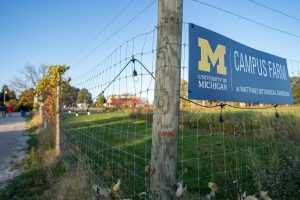
Since its founding in 2012, the University of Michigan Campus Farm, part of Matthaei Botanical Gardens & Nichols Arboretum, has grown from a student-sparked idea into a vibrant, student-driven hub for sustainable food systems work. What began as a grassroots effort by students to grow food and learn how to grow it has become what its stewards like to call “a living learning lab for sustainable food production.”
As one farm leader explains, “Before there were program managers here, students really wanted to be able to have a place to grow food, learn how to grow food, recognizing that food, how we grow it, who has access to it…has these really big impacts on personal health, community health, the health of the environment, on our economy.” That aspiration to understand food not just as nourishment but as a complex system affecting health, environment, and equity remains central to everything happening on the farm today.
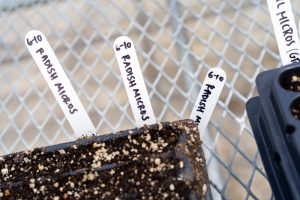
A turning point for the farm came with a partnership with Michigan Dining. Prior to that, students were growing food primarily for learning inside the classroom and out. The partnership has helped the farm expand from a small, educational plot, to multiple hoop houses and almost three acres of produce. Before the partnership, students grew food primarily as a learning experience, however, once the farm began this partnership with Michigan Dining, it gained a clear, shared purpose. “When you start to have a shared purpose to push something like that,” a team member explains, “I think that relationship with dining really catalysed the growth of the farm…” The farm produced a way to grow food at a scale that could regularly support a university dining hall, all while still providing a vital educational space for students.
The farm staff works closely with the Michigan Dining team of chefs to grow crops that fit the kitchen’s needs, making the food recognizable to all students who eat there. Foods like a variety of cherry tomatoes, kale, lettuce, and peppers, are all grown at the farm and can regularly be seen in the dining halls! “Our cherry tomatoes are kind of like a range of different colors and shapes,” one farmer says, “and when you see those, you know they’re from the farm.”
While the operational backbone of the farm revolves around growing food for the dining halls and education, the collaboration between the Campus Farm and Michigan Dining extends beyond just supplying produce. Farm staff and Michigan Dining Chefs regularly work together on season menu planning, creating dishes that highlight the Campus Farm ingredients. The farm is also working with Michigan Dining on expanding farm-to-table events and a future food waste pavilion, creating the opportunities to connect food production, preparation, and sustainability education all into one place. These initiatives continue to build the farm-to-dining experience, turning student’s every day meals into a visual example of a local, sustainable campus food system.
Another key part of the Campus Farm’s mission is making sustainable food accessible to the wider University of Michigan community. One of the farm’s most public expressions of this mission is the Campus Farm Stand, a student-led, weekly pop-up market that brings locally grown produce directly to campus.
The Farm Stand, powered by the U-M Sustainable Food Program and the Campus Farm, goes beyond selling vegetables. It is a space where students engage with sustainable food systems and leadership opportunities while providing affordable, healthy food to their peers. Since its launch in 2019, the stand has become a hub of food access and community learning, offering produce at discounted prices for students. This gives many a chance to buy seasonal greens and vegetables grown by their classmates, and support student-led sustainable food initiatives through fundraising.
The stand typically sets up on South Ingalls Mall during the academic year and is known for its welcoming atmosphere, strong student involvement, and connection to the broader sustainability goals of the University. In fact, proceeds from sales benefit student food justice projects, helping fund initiatives that use food as a tool for positive social change on and off campus.
One of the most striking features at the Campus Farm is the passive solar hoop house: a structure that captures the sun’s heat to create a greenhouse-like environment even in Michigan’s frigid cold winter months. “It is probably 20° outside right now, and it’s warm enough that I feel like maybe I should be in a t-shirt in here,” says a farm member, highlighting how these spaces extend the growing season. This allows students to harvest produce like spinach year-round and continue supplying fresh, local vegetables to Michigan Dining even outside the traditional growing months.
The Campus Farm also extends beyond food production into community engagement and education. It serves as a platform for students to think critically about food justice, climate resilience, and sustainable systems. This allows students to apply what they’ve learned in future careers that touch public health, environmental stewardship, and food equity.
As the Campus Farm grows, the original student vision still echoes: “students wanted to be able to have a place to grow food, learn how to grow food,” and in doing so, to understand how food systems shape our lives, our health, and our planet.